

Why Every Adult Over 50 Should Know About the Limited Screening Carotid Doppler
Most strokes don’t come with a warning. One minute you’re tying your shoes or laughing with a grandchild, the next you can’t speak, move one side of your body, or worse. Yet 80% of strokes are preventable — if you find the problem while it’s still silent.
That problem is almost always plaque buildup in the two carotid arteries that carry blood to your brain. When that plaque narrows the artery to 70–99%, your stroke risk skyrockets. When it ruptures, the clot that forms can block blood flow in seconds.
The test that finds this hidden danger is called a Limited Screening Carotid Doppler — a painless, no-needle, no-radiation ultrasound of your neck that takes is thorough, painless, and costs a fraction of hospital pricing
Yet 80% of strokes are preventable — if you find the problem while it’s still silent.
What the Carotid Doppler Actually Looks For
- Percentage of blockage (50%, 70%, 90% — the higher the number, the higher the urgency)
- How “soft” or unstable the plaque is (unstable plaque is far more likely to rupture and cause stroke)
- Blood-flow velocity (fast flow through a narrow opening is a red-flag warning sign
- Presence of plaque ulceration that can throw off tiny clots to the brain
What It Can Detect Before You Ever Have a Symptom
- Severe carotid stenosis (70–99% blockage) — the #1 correctable cause of stroke
- Moderate stenosis (50–69%) — early enough to reverse with medication and lifestyle changes
- Carotid artery dissection or aneurysm — rare but deadly conditions
- Re-stenosis after previous carotid surgery or stenting
How This Simple Test Saves Lives — Every Single Week
Across the country, screening programs using carotid Doppler routinely discover:
- Find 1 in 15 adults over 65 with ≥70% blockage who had zero symptoms
- Identify 1 in 8 former or current smokers with significant plaque
- Catch blockages in people who “just came in for peace of mind” and leave with a referral that prevents permanent disability or death
When severe narrowing is found early, treatment is straightforward and highly effective:
- Carotid endarterectomy or stenting can reduce stroke risk by up to 65–80%
- Aggressive medical therapy (statins, blood-pressure control, anti-platelet drugs) can stabilize plaque and prevent rupture
- Lifestyle changes can actually shrink early plaque
When it’s found late — during the stroke itself — options shrink to emergency clot-busting drugs, brain surgery, or lifelong disability.
Who Needs This Test (Even If They Feel Perfectly Fine)
- Anyone 50+ with any of these risk factors:
→ Smoking (current or past)
→ High blood pressure or cholesterol
→ Diabetes or prediabetes
→ Family history of stroke or heart disease
→ Known coronary artery disease or peripheral artery disease - All men 65–75 who have ever smoked (Medicare actually covers one screening for this group)
- Anyone who has ever had a “mini-stroke” (TIA) or unexplained dizziness, vision loss, or speech difficulty
The Test Itself Couldn’t Be Easier
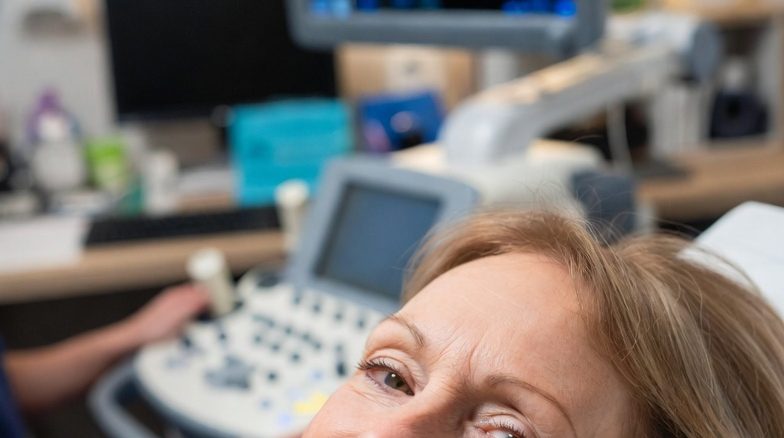
You lie comfortably on an exam table. Warm gel is placed on your neck. A technician gently glides a small ultrasound probe along each side of your neck for a few minutes on each side. You can watch the live images on the screen and even see the blood flowing in color. No compression gowns, no IVs, no claustrophobia, no radiation. Most patients say it feels like a relaxing neck massage.
The Bottom Line
Stroke is the third-leading cause of death and the #1 cause of adult disability in America. Yet the most common cause — carotid artery disease — is completely silent until the moment it strikes, and it’s incredibly easy to detect.
A Limited Screening Carotid Doppler gives you the information that turns “devastating stroke” into “problem found and fixed.”Don’t wait for slurred speech, facial droop, or arm weakness that may never reverse.
Take ten minutes to protect the rest of your life.
Call us today at 417-209-3785 to schedule your Limited Screening Carotid Doppler.
We’ll have your results explained the same day — because the stroke you prevent will always be the one that matters most.

Leave feedback about this